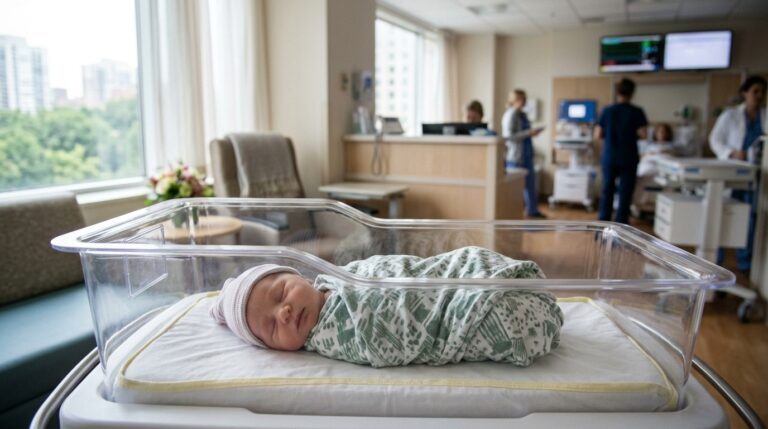

Wisconsin health authorities announced on Thursday, November 5, 2026, that a baby has died from measles, recording the state’s first fatal case of the disease in more than three decades. A local coroner identified measles as the immediate cause of death. State officials withheld the child’s exact age, city or county of residence, and vaccination status, citing privacy considerations for the grieving family.
The confirmed infant measles death represents the third measles-associated fatality disclosed across the United States within a single week. Coming alongside recent child and adult deaths in New York and Pennsylvania, the loss highlights an expanding public health emergency driven by declining childhood vaccination rates and sustained regional transmissions.
## Outbreak Conditions and Local Transmission in Wisconsin
The fatality is the first attributed to measles in Wisconsin in over thirty years, though historical records cited by news organizations vary on the precise span. NBC News reported that Wisconsin had not documented a measles death since 1990. Bloomberg described the fatality as the state’s first in 36 years, while CNN placed the interval at more than 35 years, and The Washington Post reported it had been more than three decades.
Wisconsin Department of Health Services Secretary Kirsten Johnson stated that her heart went out to the family, observing that losing a child is devastating under any circumstances and especially painful when tied to an illness that routine immunizations can prevent.
State public health surveillance indicates that the current concentration of cases is situated primarily in southwestern Wisconsin, according to reporting by The Washington Post. CNN reported that the state has tracked 431 measles cases across 13 counties during 2026, marking a sharp jump from the 36 cases recorded across all of Wisconsin throughout 2025. Nine patients have required hospital admission for measles treatment in the state this year.
Epidemiological investigations show that several local transmission chains originally stemmed from interstate travel. Dr. Stephanie Schauer, the immunization program director for the Wisconsin Department of Health Services, explained that multiple outbreak clusters began after residents traveled to out-of-state gatherings, including family funerals and weddings, and subsequently brought the virus back into their local communities.
State health leaders have highlighted that community susceptibility remains the core challenge in halting the disease. Dr. Ryan Westergaard, chief medical officer and state epidemiologist for communicable diseases at the Wisconsin Department of Health Services, explained that measles continues to circulate because there are enough susceptible hosts to sustain viral spread. He pointed out that communities possess the ability to interrupt transmission entirely and effectively eliminate the disease if sufficiently high shares of the population are immunized.
## Three Measles Fatalities Reported Across Three States in One Week
The Wisconsin case marked the conclusion of a grim four-day period in early November 2026 during which health agencies in three different states confirmed measles-related fatalities.
The week began on Monday, November 2, 2026, when New York health officials announced that a child in Lewis County had died from measles. That fatality was the first attributed to the virus in New York in 30 years. Infections had been accumulating in New York through the late summer, prompting Governor Kathy Hochul to issue a statewide disaster emergency declaration regarding measles in early October 2026.
Two days later, on Wednesday, November 4, 2026, the Pennsylvania Department of Health reported that an unvaccinated resident in Jefferson County had died after testing positive for measles. That case was Pennsylvania’s sixth measles-related fatality of 2026. NBC News reported that Pennsylvania’s outbreak began in April 2026 and has grown to approach 1,500 cases spanning 45 counties. A separate suspected death in Franklin County was noted by a local coroner in October 2026, though state health authorities have not officially verified that connection.
## Vaccine Coverage Deficits Leave Youngest Children at Risk
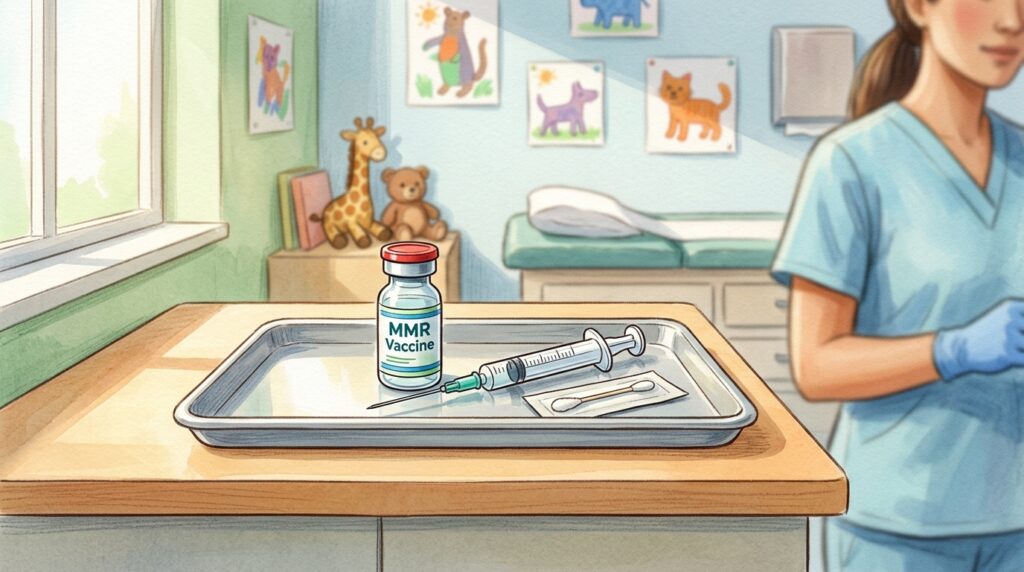
Public health professionals attribute the widening outbreaks directly to gaps in immunization coverage. The standard measles, mumps, and rubella vaccine regimen is highly effective, with two doses conferring 97% protection against infection. Epidemiologists estimate that a community requires an immunization rate of roughly 95% to maintain herd immunity, the threshold that shields newborns, infants who are too young for the standard shots, and people who cannot be vaccinated for medical reasons.
In Wisconsin, kindergarten vaccination rates have slipped to approximately 85%, well below the 95% herd immunity threshold and behind the current national kindergarten average of 92%. Under conventional pediatric guidance, infants receive their initial dose of the measles vaccine around their first birthday. However, because community transmission is active, Wisconsin health authorities revised their recommendations to suggest an accelerated early dose for babies between 6 and 11 months old who face an elevated risk of exposure.
State records reported by NBC News show that pediatricians and clinics have administered roughly 500 of these early doses to infants aged 6 to 11 months since August 2026. In addition, the Wisconsin Department of Health Services has delivered 2,000 supplemental vaccine doses to municipal and county public health departments to reinforce local vaccination initiatives.
## Rising Toll Threatens United States Elimination Benchmark
The broad resurgence has imposed significant clinical strain across healthcare networks. Measles poses severe risks to pediatric populations, causing fatal outcomes in an estimated 1 to 3 per 1,000 infected children due to acute respiratory and neurological complications.
National figures reflect an intensifying outbreak year. The Centers for Disease Control and Prevention has confirmed 4,852 measles cases nationwide during 2026, while CNN reported the total as more than 4,800. Across the country, state health departments have reported eight deaths linked to measles in 2026, of which four have been officially confirmed by the CDC to date. None of the eight individuals who died had received a measles vaccination, with public health officials clarifying that some were ineligible because of their young age or underlying medical conditions.
The surge in cases and fatalities arrives at an important historical crossroads. After large measles outbreaks in 1990 and 1991, extensive vaccination campaigns enabled the United States to declare measles eliminated in 2000, establishing that continuous local transmission had ended. Next week, the Pan American Health Organization and an international evaluation committee are scheduled to meet to examine current epidemiological data and assess whether the United States should maintain its official designation as a nation that has eliminated measles.