

In this story
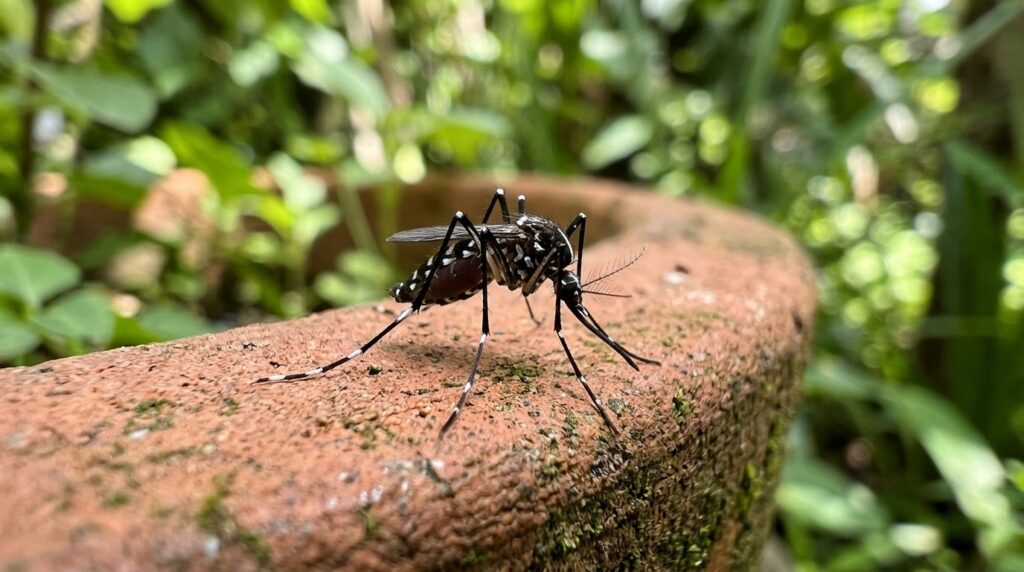
Vector control technicians in Southern California have detected invasive mosquito activity across several coastal neighborhoods this year. Santa Barbara County’s Mosquito and Vector Management District confirmed that four Aedes aegypti mosquitoes were trapped on October 30 across three separate locations in the city of Santa Barbara. The finding extends a geographic pattern that began earlier in the summer and autumn, when vector surveillance crews trapped the same non-native species in both Carpinteria and Goleta Valley, while also identifying a separate non-native species elsewhere in the city.
District personnel recovered the four October 30 specimens from distinct street locations across Santa Barbara. Technicians collected two mosquitoes near North Voluntario and East Cota streets, a third near Laguna and East Carrillo streets, and a fourth near East Victoria and Olive streets. The distribution of these traps indicates that the insects were not confined to a single residential block, prompting local vector officials to monitor surrounding neighborhoods for broader signs of colonization.
Trapping Timeline Spans Carpinteria, Goleta Valley, and Santa Barbara
The late October collections represent the third confirmed emergence of Aedes aegypti in Santa Barbara County. Technicians first recovered the species earlier in the summer, trapping specimens in Carpinteria during July. Vector surveillance subsequently identified another presence on October 20 in the eastern Goleta Valley, near the intersection of Turnpike Road and Calle Real, just ten days before the four specimens were trapped across Santa Barbara.
The sequence of detections in Carpinteria, Goleta Valley, and Santa Barbara points to an established presence of non-native vectors along the county’s coastal corridor. The findings follow the detection of another exotic mosquito species earlier in the year within Santa Barbara city limits. In March, district technicians found Aedes notoscriptus, known as the Australian backyard mosquito, in the city’s West Side neighborhood. Three months later, in June, vector crews recorded the same Australian species in the Mesa neighborhood.
These successive detections throughout the year highlight an expanding regional footprint for non-native insects that differ significantly from native mosquito species found in coastal Southern California.
Daytime Biting Habits of Aedes aegypti and Aedes notoscriptus
Both Aedes aegypti and Aedes notoscriptus possess distinct biological habits that separate them from indigenous mosquitoes. While native species typically emerge around dawn and dusk, both Aedes aegypti and Aedes notoscriptus bite during full daylight hours. Their biting is not limited to yards or patios; both species readily enter homes and bite indoors as well as outdoors.
The two species are commonly referred to as ankle biters because of their tendency to target the lower extremities. They typically hover close to the ground, biting people around the feet, ankles, and calves. Their persistent pursuit of blood meals during daylight hours often makes them a direct nuisance to residents who do not expect insect activity in the middle of the day.
Aedes aegypti, historically designated as the yellow fever mosquito, is native to Sub-Saharan Africa. Beyond causing troublesome bites, the species is recognized by public health authorities for its biological capacity to transmit viral infections, including dengue fever. According to clinical guidance from the Mayo Clinic, individuals infected with dengue fever typically begin developing symptoms between 4 and 10 days after being bitten by an infected mosquito.
Regional Context: West Nile Virus Surges in Adjacent Counties
The discovery of non-native mosquitoes in Santa Barbara County coincides with an active vector season across Southern California, where public health agencies in neighboring counties have tracked elevated viral transmission in native insect populations. In Los Angeles County, the local public health department recorded more than 180 human cases of West Nile virus this year, marking the county’s highest recorded spike in nearly a decade.
West Nile virus follows an ecological cycle that is distinct from the pathogens associated with Aedes mosquitoes. The virus circulates primarily among wild birds and is picked up by native Culex mosquitoes when they feed on infected avian hosts. These native mosquitoes then pass the virus along to humans through subsequent bites. The presence of West Nile virus has been notable across the wider metropolitan region; in Orange County, vector control authorities collected 850 traps containing insects that tested positive for West Nile virus, according to reporting by The Guardian.
The heavy regional mosquito activity has also drawn notice from the public online. A video shared to TikTok by a local resident discussing the sheer volume of biting insects this summer accumulated more than 21,000 likes from viewers throughout Southern California.
Surveillance and Reporting Guidance for County Residents
Because Aedes aegypti and Aedes notoscriptus behave differently from native species, Santa Barbara County’s Mosquito and Vector Management District relies on observations from residents to help locate emerging populations. Because native California mosquitoes do not typically bite aggressively in direct sunlight, reports of daytime attacks serve as an early indicator of invasive vector activity.
The district has advised anyone who experiences persistent mosquito bites during daytime hours, whether inside the home or outside in the yard, to report the encounters to vector control. Residents can reach technicians by calling 805-969-5050 or by submitting an inquiry online through the district’s website. Information provided by the public assists vector control specialists in mapping where these non-native insects are congregating, allowing field teams to inspect properties and position monitoring equipment in affected neighborhoods.