
In this story
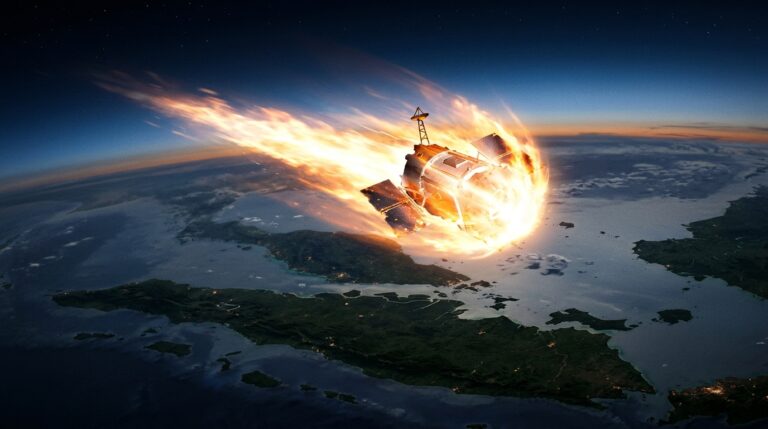
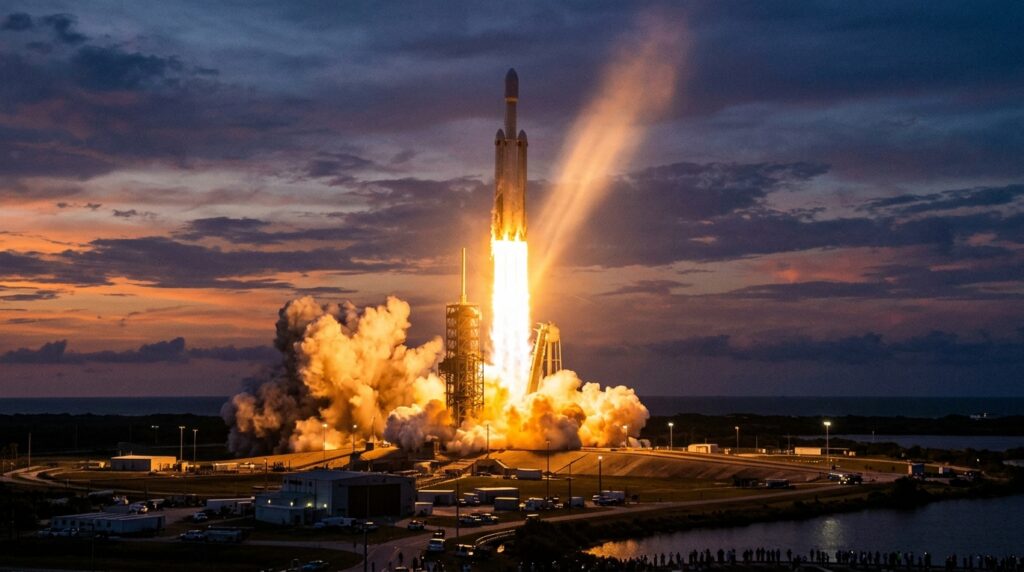
When NASA conducted the historic Artemis II launch from Kennedy Space Center on April 1, 2026, the mission represented the first crewed voyage to the Moon since the Apollo programme. Carrying four astronauts on a nine-day journey around the Moon and back, the flight marked a significant step in lunar exploration. Yet alongside its planned orbital maneuvers, the heavy-lift vehicle also left an intense physical imprint high above the planet, generating waves through the upper atmosphere that scientists are now analyzing in detail.
According to a pre-print study led by researchers from National Cheng Kung University in Taiwan, the mission created three separate, unprecedented disturbances in Earth’s ionosphere. The research paper, hosted on essopenarchive.org and connected with Geophysical Research Letters, details how the flight’s ascent and its subsequent orbital engine burns produced ionospheric disruptions stronger than those recorded for any other rocket launch to date.
Three Successive Disruptions in the Upper Atmosphere
Earth’s ionosphere sits between roughly 80 and 640 kilometers (50 to 400 miles) above the planetary surface. Comprising a layer of charged particles, this boundary reflects and transmits the high-frequency radio and satellite signals that modern terrestrial infrastructure relies upon for position tracking and telecommunications.
The study authors reported that the disturbances generated during the flight set a new precedent for rocket-induced atmospheric perturbations. What distinguished the event was not merely the raw strength of the waves, but their repeated occurrence in the same geographic region. The researchers identified this as the first time a single space mission generated three separate instances of ionospheric disturbances over the exact same area during consecutive orbital maneuvers.
Instead of creating only an isolated disturbance during its ascent from coastal Florida, the spacecraft repeatedly perturbed the plasma environment as its upper stage completed timed burns to raise its altitude and enter its planned lunar trajectory.
Timeline of the Three Orbital Shocks
The sequence of ionospheric disturbances unfolded across roughly 25 hours following liftoff. The initial event took place on April 1, 2026, as Artemis II ascended through the atmosphere after clearing the pad at Kennedy Space Center. As the vehicle accelerated upward, it produced shock-acoustic and gravity wave modulations that rippled directly into the surrounding ionospheric plasma.
The second and most expansive disturbance occurred roughly one hour after liftoff, when the spacecraft initiated an apogee raise burn. This maneuver took place deep within the high-altitude atmospheric environment. According to the research team, this firing triggered intense shock waves and disturbances that elongated across 50 degrees of longitude over North America. The resulting perturbation spread broadly across the continent, exceeding the atmospheric footprint of the initial liftoff.
A third disturbance followed on April 2, 2026, approximately 25 hours after launch. Artemis II executed its trans-lunar injection burn, the major engine firing required to send the crewed vehicle out of Earth orbit and onto its path toward lunar orbit. That engine firing generated a third wave pattern through the local ionosphere, completing a triple sequence over the same continental region.
Following these high-altitude events, the flight proceeded as planned. Five days after launch, on April 6, 2026, the four astronauts captured an Earthset photograph showing Earth dropping behind the edge of the Moon during their nine-day journey.
Implications for GPS, Drones, and Autonomous Systems
Despite the unprecedented scale of the atmospheric shock waves, the researchers reported that the April 1 liftoff did not cause widespread GPS outages on the ground. Terrestrial positioning networks and satellite navigation services continued to operate across North America while the waves moved through the upper layers.
Even without direct disruptions during the flight itself, the study authors cautioned that the physical processes observed during Artemis II highlight future vulnerabilities. Rocket plumes and high-energy burns alter electron densities in the ionosphere, which can bend, refract, or delay the transmission of radio signals passing between orbital satellites and Earth receivers.
The scientists emphasized that as heavy rocket launches become more frequent in the coming years, recurring disturbances of this magnitude could interfere with radio communications and introduce positioning errors into global navigation satellite systems. Such fluctuations pose risks for technologies that depend on uninterrupted, centimeter-accurate satellite data, including uncrewed aerial drones and self-driving cars, as well as broader terrestrial communication networks.
The Apollo programme operated decades before the deployment of modern satellite navigation constellations, automated commercial transit, and extensive drone infrastructure. As a result, the atmospheric footprint of heavy lunar rockets represents a contemporary consideration for mission planners. The authors from National Cheng Kung University concluded that tracking how heavy propulsion systems interact with Earth’s ionosphere will be essential as heavy-lift spaceflight operations become more regular.