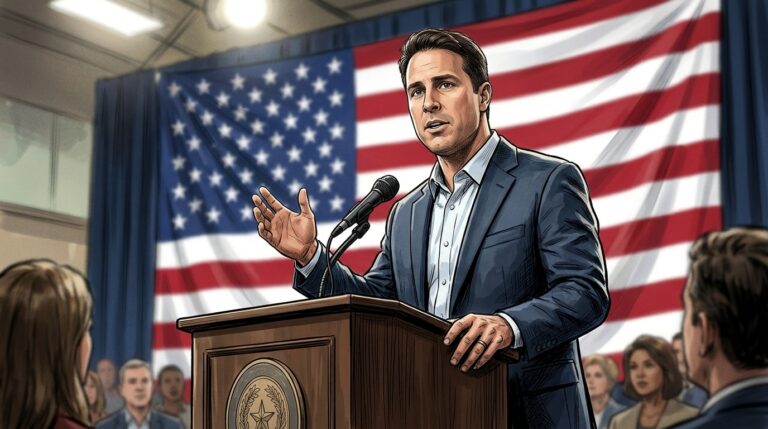

Democratic candidates swept both chambers of Congress in the November 2026 US midterm elections, ending Republican control of Capitol Hill and dealing a direct blow to the foreign and economic agenda of President Donald Trump. The results from the November 3 vote establish incoming legislative majorities that are scheduled to convene in January 2027. Public sentiment heading into election day reflected deep voter frustration over foreign conflicts and rising living costs. A Reuters and Ipsos poll conducted on the eve of balloting revealed that only 32 percent of respondents approved of the administration’s policies.
According to Al Jazeera’s tally of the returns, Democrats secured 54 seats in the 100-member Senate, while Republicans won 44, leaving two seats undecided. In the House of Representatives, Democrats crossed the 218-seat threshold required for a working majority, winning 242 seats compared to 151 for Republicans. The shift also reached statehouses across the country, where Democrats secured 28 governorships against 20 for Republicans, with two state contests still awaiting a final call. The cycle produced several historical firsts. Abdul El-Sayed of Michigan became the first Muslim elected to the Senate. In gubernatorial races, Keisha Lance Bottoms became the first Black female governor of Georgia, Gina Hinojosa became the first Latina governor of Texas, and Deb Haaland won in New Mexico to become the first female Native American governor in state history.
## The War With Iran and Shifting Energy Markets
Voter anger over the military confrontation with Iran and the resulting rise in domestic energy costs proved to be a central factor in the election outcome. The Trump administration launched the war in February 2026, opening an eight-month campaign that Al Jazeera reported has cost American taxpayers roughly $47 billion. The fighting disrupted supplies of crude oil and liquefied natural gas passing through the Gulf, driving domestic fuel prices sharply higher through the spring and summer. The conflict has also raised serious constitutional questions under the War Powers Resolution, which sets a 60-day limit on foreign military operations absent congressional authorization.
Trump maintained that the operation was necessary, arguing that while the war pushed up gasoline prices in the short term, repeating the intervention remained the only viable answer to prevent Iran from building a nuclear weapon. Incoming Democratic leadership, however, indicated that Capitol Hill will work quickly to challenge the campaign. Senator Chuck Schumer stated that the framers of the Constitution granted Congress the power of the purse precisely to restrain an executive pursuing unauthorized warfare, confirming that Democrats plan to end the conflict. At the same time, Vice President JD Vance took deliberate steps to distance himself from the military intervention.
Regional specialists and national security analysts see the political transition in Washington as a sensitive crossroads. Ebtesam al-Ketbi, president of the Emirates Policy Center, noted that if leaders in Tehran perceive that Trump needs a negotiated settlement, a genuine diplomatic opening to halt the war could emerge. However, she warned that reading the election results as American weakness might prompt Tehran to pursue military escalation instead. James Boys, a research fellow at University College London’s Centre on US Politics, noted that blocking appropriations while troops remain deployed abroad presents severe political difficulties and risks allegations of placing American service members in danger. Meanwhile, energy markets signaled an expectation that the conflict might ease. Saxo Bank analyst Ole Hansen observed that commodity traders appeared to be betting the administration will look for a way out of the Middle East war. Crude oil prices dropped for a third straight day on Wednesday, November 4, 2026, coinciding with gatherings in Tehran marking the 47th anniversary of the 1979 takeover of the US embassy, an episode in which 52 American personnel were held captive for 444 days.
## Eastern Europe Strategy and Sanctions on Russian Oil
The Democratic takeover of Congress brings immediate friction to the administration’s posture toward Eastern Europe. Since returning to the White House in January 2025, Trump has largely halted or withdrawn direct financial and military assistance to Ukraine. Following a White House meeting with Ukrainian President Volodymyr Zelenskyy in February 2026, the administration faced bipartisan backlash in October 2026 when it lifted or suspended sanctions on Russian energy and began purchasing Russian oil. That decision directly undermined bipartisan legislation enacted by Congress only a month earlier, in September 2026, intended to cut off Russian oil revenues.
Relations between Washington and Kyiv grew increasingly fraught as Ukrainian authorities accused the United States of withholding vital intelligence on incoming Russian missile strikes and restricting access to the Starlink satellite communications network operated by Elon Musk. In an interview with the German public broadcaster ZDF, Zelenskyy expressed hope that a new balance of power in Congress might revive American support for Ukraine. In Moscow, the Kremlin issued a statement voicing hope that the midterm results would not hinder Trump’s peacemaking efforts.
Legislative pushback is already taking shape on Capitol Hill. Democratic Representative Gregory Meeks of New York, a leading candidate to chair the House Foreign Affairs Committee, introduced bipartisan legislation designed to stop plans to reintroduce Russian diesel into international markets. Changing the administration’s policy through legislation will remain an uphill climb, however, as overriding a presidential veto requires a two-thirds majority in both the House and the Senate.
## Middle East Aid and Technology Scrutiny
The incoming majorities will also have to navigate long-standing aid commitments across the Middle East. Regional stability has remained precarious since Israel launched its war in Gaza in October 2023, accompanied by sustained debate in Washington over the political influence wielded by the pro-Israel group AIPAC. During an appearance on Fox News, Trump stated that Israeli Prime Minister Benjamin Netanyahu suggested the United States end its $4 billion in annual military assistance, adding that Washington had agreed to halt payments to Israel by the end of the year. The announcement came in the wake of an inconclusive national election held in Israel in October 2026.
Beyond national security and foreign policy, the midterm results pose new obstacles for the administration’s trade and regulatory agenda. On international trade, former Indian trade secretary Anup Wadhawan observed that Trump’s ability to impose unilateral tariffs has been curtailed because major trade actions will ultimately require congressional assent. Across the Atlantic, the European Investment Bank approved a loan of 3 billion euros—equivalent to approximately $3.37 billion based on an exchange rate of 0.8905 euros per dollar—for the aerospace manufacturer Airbus, introducing fresh friction into the transatlantic trade truce.
Technology companies felt the political shift immediately. On Wednesday, equity shares fell across major Asian semiconductor producers, including TSMC, Samsung Electronics, SK Hynix, and Kioxia, while American data center operators suffered matching declines. Jake Dollarhide, chief executive of Longbow Asset Management, explained that full Democratic control of Congress will subject the tech sector to sharper regulatory scrutiny, with lawmakers expected to direct particular attention toward the swift expansion of artificial intelligence.